Meta Analysis
Geographic Patterns of Genetic Structure and Global Gene Flow in Catfish Populations 

 Author Correspondence author
International Journal of Molecular Ecology and Conservation, 2025, Vol. 15, No. 3 doi: 10.5376/ijmec.2025.15.0013
Received: 28 Mar., 2025 Accepted: 30 Apr., 2025 Published: 18 May, 2025
Hong W.Y., and Mai R.D., 2025, Geographic patterns of genetic structure and global gene flow in catfish populations, International Journal of Molecular Ecology and Conservation, 15(3): 123-133 (doi: 10.5376/ijmec.2025.15.0013)
This study summarizes the geographical pattern of catfish population genetic structure and global gene flow characteristics, expounds the theoretical basis and technical progress of catfish population genetic research, compares the typical patterns of catfish population genetic structure in different regions such as Asia, Africa and South America, Europe and North America, and analyzes the dynamic mechanisms affecting global catfish gene flow, including geographical and ecological barriers (such as watershed isolation, habitat differences), paleoclimate and geohistorical events, and human activities (such as dams and species introduction). At the same time, it also explores the significance of population genetic structure and gene flow in ecological adaptation, hybridization consequences and speciation, and uses case studies such as Asia (such as the giant catfish in the Mekong River), America (such as the Amazon migratory catfish) and human introduction (such as the invasion of African catfish in Bangladesh) to deepen understanding. This study looks forward to the application prospects of catfish population genetic research, such as genetic resource protection, breeding application, advanced technical means and international cooperation, and provides a reference for population genetic research and resource management of catfish and other aquatic organisms.
1 Introduction
Siluriformes (commonly known as catfish) include about 40 families and more than 4 000 species, which are widely distributed in tropical and temperate regions such as Asia, Africa and South America (Segaran et al., 2023). Catfish often play an important role in freshwater ecosystems. Many species are top predators or economic fish, which are of great significance to maintaining biodiversity and fishery output. For example, the African catfish (Clarias gariepinus), the Asian river catfish (Pangasianodon hypophthalmus) and the American catfish (Ictalurus punctatus) are all important breeding or fishing targets. However, at the same time, many catfish species face the risk of population decline or even endangerment due to overfishing, habitat loss or invasion of alien species. Genetic diversity is the basis for species adaptation and sustainable development, and the loss of genetic diversity may reduce the ability of populations to adapt to environmental changes. In recent years, global biodiversity conservation goals have also begun to emphasize the monitoring and protection of genetic diversity.
Population genetic structure refers to the genetic differentiation pattern between different geographical groups, reflecting the degree of gene exchange and isolation in space. Gene flow refers to the exchange of genes caused by the migration and successful reproduction of individuals between populations. It can dilute genetic differentiation and maintain genetic consistency of populations, but excessive gene flow may hinder the formation of local adaptation (Sunde et al., 2020). On the contrary, when gene flow is limited, different populations will accumulate differences under the action of drift and selection, forming a significant genetic structure. For widespread catfish, populations in different water systems or geographical regions often have obvious differences in the degree of gene exchange: some populations have frequent gene exchanges and shallow genetic structures due to strong migration ability or habitat connectivity, while others are highly differentiated due to geographical barriers or ecological isolation (Popoola, 2022). Exploring the genetic structure and gene flow of catfish populations not only helps to understand their evolutionary history and adaptation mechanisms, but is also crucial for formulating regional fishery management, species protection and aquaculture variety improvement strategies (Ali et al., 2021).
This study will summarize the main findings and progress in the study of catfish population genetic structure and gene flow in recent years, focusing on the patterns and causes of different geographical regions, introducing the basic theories and technical development of catfish population genetics research, comparing the genetic structure and geographical patterns of representative catfish populations in Asia, Africa-South America, and Europe-North America, and also analyzing the key factors and mechanisms affecting catfish gene flow, and discussing the ecological and evolutionary significance of genetic structure and gene flow, including local adaptation, hybridization effects, and speciation. After introducing classic cases, it will look forward to the prospects of catfish population genetics research in species protection, genetic breeding, new technology application, and international cooperation. This study hopes to provide a reference for the protection and sustainable use of global catfish resources.
2 Theoretical Basis and Technical Progress of Catfish Population Genetics Research
2.1 Theoretical basis of population genetics
The study of catfish population genetic structure and gene flow is based on the classical population genetics theory. According to the principles of population genetics, an ideal population should conform to the Hardy-Weinberg equilibrium when there are no selection, mutation, migration and other factors. However, various evolutionary forces in nature will break this balance, causing differences in allele frequencies between different populations. Genetic drift plays an important role in small populations, often leading to random differentiation of different populations; gene flow transmits alleles between populations through migration and hybridization, playing a role in balancing genetic variation.
Common indicators for measuring the degree of population differentiation include FST value, which reflects the proportion of inter-population variation in total variation. When FST is close to 0, it means that there is no obvious differentiation between populations and frequent gene exchange. A higher FST value means that gene flow is limited and the population is highly differentiated (Sunde et al., 2020). For example, studies on fish populations have shown that low genetic differentiation often corresponds to higher migration and gene flow, while strong differentiation indicates geographic or reproductive isolation. In addition, local adaptation can occur when gene flow is restricted: different environmental conditions drive each population to accumulate different adaptive alleles, further exacerbating the genetic structure. In contrast, high-intensity gene flow may weaken the adaptive differences between populations.
2.2 Characteristics of ecological distribution and genetic pattern of catfish
Catfish mostly inhabit freshwater bodies such as rivers, lakes, and a few species enter brackish waters in estuaries. Their ecological distribution and migration ability have a direct impact on the genetic structure of the population. For example, many tropical catfish species are confined to a single basin and lack the ability to migrate long distances, which makes populations in different river systems isolated for a long time and gradually accumulates significant genetic differentiation. In Africa, some African catfish (Clarias) populations show a highly differentiated pattern between different water systems due to river separation. Popoola (2022) analyzed African pointed catfish (C. gariepinus) in three rivers in Nigeria and found that the mitochondrial haplotypes of the river populations were not shared at all, and the FST between populations was as high as 0.95, showing a strong geographical structure.
In contrast, some catfish have long-distance migration behaviors or live in connected water systems, so there is frequent gene exchange between different regional populations and the genetic structure is relatively uniform (Formiga et al., 2021). For example, large migratory catfish living in the mainstream of the Amazon River in South America, such as Brachyplatystoma species, can migrate thousands of kilometers across the river basin, forming a nearly pan-dense genetic pattern. Studies have shown that the giant catfish Piramutaba (B. vaillantii) in the middle and lower reaches of the Amazon River has no significant genetic differentiation within thousands of kilometers, and all sampled populations form a single pan-mictic population with an FST of only about 0.001 4. Therefore, due to different migration abilities and habitat connectivity, different catfish species can present a continuous spectrum of genetic structure patterns from highly differentiated to basically undifferentiated, which provides ideal materials for comparative analysis.
2.3 Development, evolution and application of research technology
The technical means used in catfish population genetics research have undergone a development process from traditional markers to high-throughput genomic means. Early studies often used biochemical markers such as isozymes and electrophoretic proteins and molecular markers such as random amplified polymorphic DNA (RAPD) and simple sequence repeats (SSR, i.e., microsatellites) to assess genetic variation. However, RAPD and early molecular markers have limitations in repeatability and information content. Entering the 21st century, a large number of co-dominant, highly polymorphic microsatellite markers have gradually become the main force in fish population genetic research. Many studies on catfish have constructed microsatellite primers and analyzed population structure. For example, Kim et al. (2020) used microsatellites to compare the genetic variation of wild and farmed populations of Far Eastern catfish (Silurus asotus) in South Korea, and found that the allele richness of farmed populations was slightly lower than that of wild populations, but the overall genetic diversity was still high, and the genetic differentiation between populations was very weak.
With the development of second-generation sequencing and third-generation sequencing, whole-genome scanning of SNP (single nucleotide polymorphism) markers has become a trend (Sunde et al., 2020). For non-model catfish, commonly used methods include RAD-seq (restriction fragment associated sequencing) and its improved methods, simplified genome sequencing technologies such as DArT-seq, and complete whole genome resequencing. For example, Vietnamese and Australian scholars collaborated to use DArT-seq technology to conduct population genome analysis of wild and farmed striped catfish (i.e., Pangasianodon hypophthalmus) in the lower Mekong River. Waldbieser et al. (2023) published high-quality reference genomes of North American channel catfish (Ictalurus punctatus) and blue catfish (I. furcatus), and constructed chromosome-level reference sequences for these two important farmed catfish. The abundance of genomic resources has greatly promoted the depth of catfish genetic research. For example, through the analysis of the whole genome and pedigree of channel catfish, researchers recently discovered that this species has a unique paternal monoallelic sex determination mechanism, that is, the expression of a single paternal allele determines sex. This discovery refreshes people's understanding of the sex determination method of bony fish (Wang et al., 2022). In addition, emerging gene editing technologies have also begun to be tried in catfish, such as CRISPR/Cas9 knockout experiments on catfish sex-related genes.
3 Geographical Patterns of Genetic Structure of Catfish Populations Worldwide
3.1 Asia: coexistence of diverse patterns
Asia is one of the regions with the highest diversity of catfish species, including a large number of species from multiple families such as Siluridae, Siluridae, and Catfish. In the basins of large Asian rivers, the genetic structure patterns of different catfish populations have both highly connected and significantly differentiated cases. Catfish in the Mekong River basin have been studied in depth. Population genome analysis of Pangasianodon hypophthalmus, also known as striped catfish, which has extremely high economic value, showed (Kim et al., 2018; Manna et al., 2021) that there are at least two genetically distinct populations of this species in the lower Mekong River: the wild population in Thailand and the population in the Cambodia-Vietnam section have obvious genetic distances, which is speculated to be related to geographical barriers. Interestingly, the wild population in Thailand has the highest genetic diversity, while some wild populations in Cambodia and Vietnam have relatively low genetic diversity, which may be related to the differences in the history of fishery development and aquaculture release in different river sections.
Another Mekong catfish, Pangasius krempfi, is a brackish-water tolerant catfish that can migrate to the sea. Mitochondrial control region analysis found that although this species did not show geographically separated genetic differentiation in different sections of the Mekong River, there were three genetic lineages (haplotype groups) coexisting in various places (Duong et al., 2023). In contrast, some catfish with a more scattered distribution in Asia and limited migration capacity showed significant local differentiation. For example, the Magur catfish (also known as the Indian bighead catfish, Clarias magur), which is endemic to the Indian subcontinent, has obvious genetic differentiation among populations in different regions because it inhabits river wetlands and has a small range of activity. The study also found that the overall genetic diversity of the Magur catfish is low, reflecting that its wild population has been reduced due to habitat destruction and overfishing, and its genetic variation has been damaged. This situation deserves great attention, and independent conservation measures need to be formulated for populations in different regions (Sahoo et al., 2021).
3.2 Africa and South America: river isolation and super migration
Africa and South America are both freshwater fish diversity hotspots, with many catfish species with their own characteristics. Although the genetic patterns of catfish populations in the two continents are different, one thing in common is that the isolation of the river basin has an important impact on the genetic structure. African catfish (especially members of the Clariidae family) are often distributed in independent river and lake systems. The gene exchange between populations in different river systems has been restricted for a long time, showing significant genetic differentiation. For example, Popoola (2022) conducted mitochondrial DNA analysis on North African catfish (i.e., African pointed catfish, Clarias gariepinus) in three independent lakes/rivers in Nigeria. The results showed that the populations in each water body had a unique haplotype lineage, and the genetic distance between populations was extremely large.
In addition to river basin isolation, the genetic structure of catfish populations in South America is also significantly affected by the ultra-long-distance migration behavior of these fish. The Amazon-Orinoco River basin in South America is home to a variety of giant migratory catfishes, whose migration behavior allows for gene exchange between long-distance populations in the main river channel (Figure 1) . The Amazon white catfish (Brachyplatystoma vaillantii), which belongs to the same family as the Panamerican catfish, is a representative species of the Amazon-Atlantic migration (Barthem et al., 2017). Its population along thousands of kilometers of the Amazon River has almost no genetic structure (Formiga et al., 2021). However, not all South American catfishes show such a weak structure. Some small and medium-sized catfishes are distributed in the huge Amazon basin, but their migration ability is limited or confined to tributaries, so they may have a geographical lineage structure. For example, the Medellin catfish (Pseudoplatystoma magdaleniatum) showed an overall single population before and after the damming of the Magdalena River basin in Colombia (García-Castro and Márquez, 2024).
 Figure 1 Several migratory giant catfish species in the Amazon basin (Brachyplatystoma, Pimelodidae) (Adopted from Barthem et al., 2017) Image caption: (A) Brachyplatystoma vaillantii; (B) Brachyplatystoma rousseauxii; (C) Brachyplatystoma platynemum; (D) Brachyplatystoma juruense; (E) Dorado migrations exploited by fishermen (Adopted from Barthem et al., 2017) |
3.3 Europe and North America: invasion and localization patterns
Compared to tropical regions, native catfish in Europe and North America have lower diversity and relatively shallow differentiation of population genetic structure. In Europe, native catfish are mainly European catfish (Silurus glanis, also known as river catfish or glanis catfish), whose historical distribution center is in the Danube River and Eastern European waters (Cucherousset et al., 2018; Ditcharoen et al., 2019). Since European catfish only re-spread after the glacial period, the genetic differences between modern populations are limited. Previous studies based on mitochondrial DNA have found that European catfish in Eastern European rivers have not formed obvious phylogenetic differentiation. However, in recent years, as this species has been introduced into some basins in Western Europe by humans and formed breeding populations, its genetic structure has become more mixed. At present, in Western Europe (such as Spain and Italy), multiple alien European catfish populations are derived from mixed releases of seedlings from different origins. It is speculated that there is multi-source hybridization, so the genetic diversity within the alien population is higher.
In North America, native catfish are concentrated in the family Ictaluridae, including species such as channel catfish, blue catfish, and flathead catfish. Large North American catfish are widely distributed in connected water systems such as the Mississippi River and its tributaries. Under natural conditions, gene exchange between populations is relatively smooth, and the overall genetic structure is not very different (Ondračková et al., 2025). Janzen and Blouin-Demers (2023) studied North American channel catfish and found that although the species inhabits different types of habitats (rivers and lakes), it generally shows low genetic differentiation, and there is no obvious geographical gradient in neutral genetic variation among populations in various places. However, local structures have also been observed in certain specific environments. For example, differences in habitat preferences may cause channel catfish to form substructures in large rivers and adjacent lakes. Blue catfish, another important species in North America, has been introduced in large numbers into the Atlantic coastal basin as a sport fish, and has produced invasive populations in places such as the Chesapeake Bay. The blue catfish populations in these areas are established by exogenous individuals and may be mixed with different genetic strains, causing the genetic composition of the new population to change compared with the place of origin.
4 Dynamic Mechanism and Diffusion Path of Global Catfish Gene Flow
4.1 The limiting effect of geographical and ecological barriers on gene flow
Geographical barriers are the primary factor limiting gene flow. For most catfish, land and mountains constitute a hard barrier to the spread of freshwater fish. Catfish populations in different basins are often isolated for a long time and cannot exchange genes through natural channels. For example, there is no direct connection between the major basins of the Nile River, Congo River, and Niger River in Africa, so catfish populations in different rivers have evolved independently (Popoola, 2022). The Mekong River catfish can flow downstream to the coast, then migrate horizontally along the coastline, and then enter another tributary, thus realizing a migration route that "bypasses the estuary". Studies have observed that the populations of catfish in different tributaries "converge" and "recombine" after entering the sea, and migrate parallel long distances along the coast, resulting in genetic mixing of the populations in each tributary (Duong et al., 2023). This shows that for catfish with strong salt tolerance, seawater is not an insurmountable barrier.
In contrast, even if strictly freshwater species are not far apart geographically, gene flow is also difficult to achieve if there are saltwater or completely dry areas in between. Habitat fragmentation (such as wetland drying and seasonal interruption of rivers) can also form ecological isolation, temporarily or permanently isolating catfish populations (Valenzuela-Aguayo et al., 2019). In addition, reproductive habits and behaviors can also act as barriers to gene flow. Even if some catfish live in connected water bodies, differences in spawning site preferences or reproductive migration routes may lead to "sympatric isolation". For example, if two populations spawn in different tributaries of the same river, and the migration of young fish has an imprinting effect, then over time, the genetic exchange between the two populations will decrease. However, this mechanism has been less studied in catfish and more observations are needed.
4.2 The role of paleoclimate change and geological events
Historically, climate and geological changes have shaped the current distribution pattern of catfish populations and have had a profound impact on gene flow. During periods of glaciation and sea level change, different basins may have been connected or separated. For example, the Amazon and Orinoco basins in South America have been temporarily connected and separated by tributary spillovers many times in geological history, resulting in complex interweaving of catfish lineages in the two basins. There is evidence that some catfish (such as species of the genus Hypophthalmus) exchanged genes during the historical connection period of the Amazon-Orinoco, and then evolved separately after the rivers separated, forming similar but independent species today (Lujan et al., 2017; Collins et al., 2018). At present, there are no shared Pseudoplatystoma catfish species in the Amazon and Orinoco, which is believed to be caused by geological isolation.
In Africa, Quaternary climate fluctuations caused the expansion and contraction of lake water systems, which once promoted the convergence and divergence evolution of catfish populations in the Great Lakes of East Africa: when the lake level was high, catfish from different lakes mixed with each other through spillover rivers, and when the lake level was low, they were trapped in isolated water bodies and evolved separately, leaving behind complex genetic lineages. A similar example is the Asian inland river catfish. When the river network changed during the last glacial period, different tributaries may have been temporarily connected, causing catfish species to exchange genes in adjacent basins, resulting in the "most recent shared ancestor" phenomenon currently observed in genetics, that is, the gene lineages of catfish in adjacent basins are mixed rather than completely corresponding to geographical isolation (Watanabe and Nishida, 2003; Fang et al., 2022).
4.3 Genetic exchange driven by human activities
Human activities have become a dominant factor affecting catfish gene flow in modern times. On the one hand, river damming and water conservancy projects directly change the connectivity of freshwater ecology. Large dams block the migration channels of migratory fish, limiting or even interrupting the genetic exchange between upstream and downstream populations. For example, the construction of the Ituango Dam on the Magdalena River in Colombia is believed to gradually cause genetic separation between the upstream and downstream populations of the Medellin catfish in the river (García-Castro and Márquez, 2024). It can be seen that the barriers set up by humans on rivers are becoming new isolation mechanisms, exerting differentiation pressure on the originally connected catfish populations. Similarly, habitat fragmentation caused by projects such as river straightening and wetland reclamation will also reduce the migratory reproduction opportunities of catfish and reduce gene flow.
On the other hand, the intentional or unintentional introduction and release of species by humans have changed the pattern of catfish gene flow. Globally, catfish are often introduced into new areas as aquaculture and fishery resources due to their strong adaptability and rapid growth. For example, African catfish were introduced to many Asian countries for breeding in the second half of the 20th century and established wild populations in local water bodies. A study in Bangladesh revealed evidence of hybridization between alien African catfish and native walking catfish (Clarias batrachus) (Parvez et al., 2022). This suggests that the invasive African catfish has genetically introgressed with the native walking catfish, resulting in the "dilution" of the gene pool of the original species. Similarly, the introduction of North American catfish into European waters poses a risk of cross-species hybridization. In addition, large-scale seedling release and breed improvement programs are also changing the genetic exchange pattern of catfish. In order to increase production, many farms will crossbreed strains from different regions.
5 Ecological and Evolutionary Significance of Catfish Population Structure and Gene Flow
5.1 Relationship between population differentiation and local adaptation
Populations with distinct genetic structure often contain their own unique genetic variation, which may form local adaptation under long-term environmental selection. Populations with limited gene flow are more likely to accumulate allele combinations adapted to the local environment, thereby improving adaptability to specific habitats. For example, geographically isolated populations of Magur catfish live in wetlands with different ecological conditions such as temperature and pH, and it is speculated that they have produced local differences in growth and reproductive cycles.
On the contrary, populations with frequent gene flow have their genotype frequencies constantly recombined between different environments, and strong foreign gene mixing may dilute the accumulation of local beneficial mutations, making it difficult to consolidate local adaptation. This may be a disadvantage in the case of rapid environmental differentiation, but in the case of frequent environmental changes, high gene flow can ensure that the population maintains a high genetic diversity. Cubry et al. (2022) pointed out in their review that when there is environmental heterogeneity, limited gene exchange is conducive to directional selection and genetic differentiation of different populations along their respective environmental gradients; however, if there is still moderate gene flow between heterogeneous environments, it will help to increase the speed of adaptation through the introduction of new alleles. Therefore, gene flow and local adaptation are a balanced relationship: a small amount of gene flow may provide raw materials for genetic variation while not destroying the adaptive combination, thereby achieving a "balanced genetic structure".
5.2 Evolutionary consequences of hybridization and gene penetration
When previously isolated populations re-contact through gene flow, hybridization will occur, and its eco-evolutionary consequences depend on the degree of hybridization and kinship. For hybridization between different populations within the same species (mixing of gene pools), it can often increase the heterozygosity of offspring and produce hybrid vigor effects. Hybridization can quickly combine beneficial genes from different populations and improve overall adaptability. Therefore, the moderate introduction of foreign genetic components in populations with declining fishing may increase genetic diversity and alleviate inbreeding depression.
However, hybridization may also have negative consequences. If the gene flow introduces alleles that are not adapted to the local environment, it may cause offspring to be maladapted, which is the so-called hybrid disadvantage or foreign gene load. In addition, for species that have evolved independently for a long time or deeply differentiated populations, hybridization will cause genetic pollution and threaten the purity of the local gene pool. The study of Parvez et al. (2022) is an example: after the alien African catfish invaded Bangladesh, it hybridized with the local walking catfish in large quantities, resulting in the erosion of the latter's genetic composition, and purebred local catfish became increasingly difficult to identify. In view of this, when there is an invasion of alien catfish, isolation and removal measures should be taken in time to protect the genetic integrity of the local population.
5.3 Speciation and phylogenetic evolution
The dynamic balance between gene flow and isolation plays a decisive role in the speciation process of catfish. When a population is isolated from other populations for a long time and the gene flow approaches zero, reproductive isolation may occur after sufficient generations of mutation and selection accumulation, thereby differentiating into new species (Huey et al., 2006; MacGuigan et al., 2022). In rivers where catfish are widely distributed, many "subspecies" or "populations" are actually in the incipient speciation stage. The presence of gene flow often delays the completion of speciation. In a high gene flow environment, even if adaptive differences occur, they may merge again due to hybridization (fusion species phenomenon).
On the contrary, once gene flow is blocked, each population will quickly accumulate differences under drift and different selection pressures, and the process of speciation will accelerate. For catfish, watershed separation provides a natural "speciation workshop": many sister species are distributed in adjacent but independent river systems, presumably due to geographical isolation. At the same time, in the same watershed, we also observed a "population-species continuum", such as some Pseudoplatystoma catfish populations with partial reproductive isolation, which is in the intermediate state between subspecific differentiation and speciation. Waldbieser et al. (2023) found that there are multiple inversion differences in the genomes of channel catfish and blue catfish. These differences may have restricted hybrid exchange during the speciation process of the two, and contributed to species isolation at the genetic level.
6 Case study of Genetic Structure and Gene Flow in Catfish
6.1 Population structure of catfish in the Mekong River in Asia
The giant catfish (striped catfish) in the Mekong River basin is an important aquaculture and fishing species in Southeast Asia. Vu et al. (2020) used SNP typing to compare the genetic structure of wild and farmed striped catfish in Thailand, Cambodia and Vietnam, and found that the downstream population can be divided into two main genetic groups: the wild population in Ubon Ratchathani, Thailand is a separate group with the highest genetic diversity, while the wild population in Dong Thap Province, Vietnam and Phnom Penh, Cambodia, clusters with the local farmed population in another group, reflecting the limited gene exchange between regions. The study also found that the genetic diversity of the farmed population was significantly lower than that of the wild population, with an average heterogeneity of only about half that of the wild population. This suggests that inbreeding or genetic drift may have occurred in the past breeding process, narrowing the gene pool of the farmed strain. This case highlights the possible hidden genetic differentiation between catfish populations in different river sections of the same basin, and the need to formulate management measures for different regions; at the same time, it reminds that breeding practices should pay attention to the introduction of wild bloodlines to maintain genetic diversity.
6.2 Gene flow of migratory catfish in the Amazon of South America
The whip catfish (Brachyplatystoma vaillantii) in the Amazon River of South America is known for its long-distance migration. Formiga et al. (2021) collected mitochondrial control region sequences from 150 whip catfish from five locations within a thousand kilometers of the Amazon River. The results showed that all samples were mixed to form a single unstructured population. The genetic differences between the collection points were minimal, and almost 100% of the variation in the molecular variance analysis came from individuals rather than between populations. This case clearly shows that the gene flow of whip catfish is free throughout the main Amazon river: adult fish spawn at the estuary, juvenile fish swim downstream to the ocean near the estuary to feed, and then subadults and adults swim upstream thousands of kilometers to return upstream to spawn. This cycle allows individuals throughout the basin to continuously exchange genes. The high gene flow of the whip catfish population also leads to its extremely high genetic diversity throughout the basin, and almost every fish has a unique haplotype. This result is of great significance for fishery management. This case highlights the genetic connectivity and management challenges of ultra-long-distance migratory fish, and is one of the few examples in the world that can prove that "large river fish populations are mixed on a scale of thousands of kilometers."
6.3 Impact of artificial introduction on the genetics of local catfish
The walking catfish (Clarias batrachus) native to Bangladesh was originally a common small catfish in the country, but its resources have declined due to overfishing and habitat changes. At the end of the 20th century, the faster-growing African catfish (C. gariepinus) was introduced from Thailand and Africa for farming. Although the government subsequently banned the farming of African catfish to protect local species, many farmed African catfish have escaped into natural water bodies. Parvez et al. (2022) compared the sequences of "walking catfish" collected in the wild in Bangladesh with those of walking catfish in other Asian countries and African catfish through mitochondrial COI and Cyt b gene analysis. The results were shocking: the "walking catfish" samples collected in Bangladesh did not cluster with the walking catfish in India and Thailand, but clustered with African catfish. In other words, these individuals collected locally are genetically closer to the invasive African species. Further analysis revealed that some of these "walking catfish" samples are actually hybrid offspring that are morphologically similar to local species (Figure 2): their mitochondrial sequences are almost identical to those of African catfish, suggesting that the maternal genome of African catfish has infiltrated the local population.
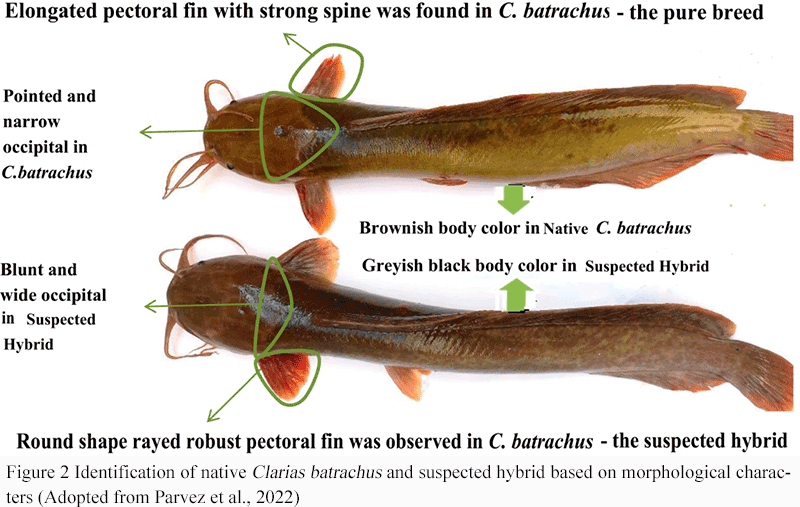 Figure 2 Identification of native Clarias batrachus and suspected hybrid based on morphological characters (Adopted from Parvez et al., 2022) |
7 Application Prospects and Research Prospects
7.1 Genetic diversity protection and germplasm resource management
Clarifying the genetic structure of different catfish populations will help identify evolutionarily significant units (ESUs) and management units (MUs), thereby implementing targeted conservation strategies. For genetically significantly differentiated populations, mixed fishing and mixed breeding should be avoided to protect their unique gene pools. On the contrary, for fish with frequent gene flow and a single population (such as the Amazon whip catfish), each region should coordinate and control fishing intensity. It is not possible to implement fishing restrictions only in local areas while allowing over-exploitation in other areas, because the entire population is connected, and the decline of one area will affect the entire region. Through genetic marker monitoring, managers can also promptly discover the changing trends of population genetic diversity, so as to take early intervention measures such as enhancement and release. The latest IUCN guidelines also incorporate genetic diversity into the biodiversity monitoring framework, proposing that species and populations with unique genetic lineages should be monitored first (Hvilsom et al., 2022).
7.2 Aquaculture breeding and genetic improvement
Catfish is an important farmed fish in the world, and genetic research has great potential in the cultivation of new strains and breeding of improved varieties. By analyzing the genetic structure of the cultured population, we can understand whether its genetic basis is robust and whether there is an inbreeding risk. On the other hand, population genetic analysis can identify the genetic distance between different strains and genetic markers related to excellent traits, which can be used to formulate breeding and mating strategies. Popoola (2022)'s study on African catfish suggested that farms should select parents from wild populations with a long genetic distance and implement hybrid breeding to produce offspring with better growth performance and higher genetic diversity. . With the development of genomic technology, molecular breeding has also begun to be applied to catfish: high-density SNP chips or whole-genome selection technology can accelerate the screening of individuals with target traits such as disease resistance and fast growth. Zhu et al. (2024) pointed out in their review that CRISPR/Cas9 gene editing technology has been successfully used in the study of catfish sex control genes and growth trait improvement experiments. In the future, it is not ruled out that new catfish strains with stronger stress resistance or better breeding performance will be directly cultivated through genetic engineering.
7.3 New technologies and data sharing cooperation
In the future, catfish population genetics research will benefit greatly from the development of emerging technologies. Non-invasive methods such as environmental DNA (eDNA) monitoring have shown promise for fish community and population detection and are expected to be applied to population movement tracking and genetic monitoring in catfish habitats. At the same time, the further reduction in the cost of high-throughput sequencing will make whole-genome-scale data more widely available, making it possible to analyze the impact of adaptive genetic variation and genomic structural variation on population differentiation. At present, reference genomes for some catfish have been constructed (such as channel catfish, blue catfish, and yellow catfish). In the future, these reference genomes can be used to carry out population resequencing to find functional allele differences related to environmental adaptation or reproductive strategies. In addition, the development of big data and bioinformatics platforms has also promoted global cooperation and data sharing. Both Formiga et al. (2021) and Vu et al. (2020) emphasized the necessity of transnational cooperation for the management of migratory catfish. At the policy level, international organizations such as IUCN have incorporated genetic diversity into the strategic goals of biodiversity. Countries should promote the establishment of genetic resource monitoring networks and incorporate genetic data of important species such as catfish into long-term observations. Through regional and global cooperation, we can more effectively respond to cross-border challenges such as invasive species and climate change and maintain the health and evolutionary potential of catfish populations.
Acknowledgments
We are grateful to review expert for critically reading the manuscript and providing valuable feedback that improved the clarity of the text.
Conflict of Interest Disclosure
The authors affirm that this research was conducted without any commercial or financial relationships that could be construed as a potential conflict of interest.
Ali M.F., Salam M.A., Sarder M.R.I., Rahman M.M., and Mollah M.B., 2021, Genetic diversity and population structure of endangered catfish Rita rita (Hamilton, 1822) revealed by heterologous microsatellite markers, Asian Fisheries Science, 34(2): 181-194.
https://doi.org/10.33997/j.afs.2021.34.2.007
Barthem R., Goulding M., Leite R., Cañas C., Forsberg B., Venticinque E., Petry P., Ribeiro M., Chuctaya J., and Mercado A., 2017, Goliath catfish spawning in the far western Amazon confirmed by the distribution of mature adults, drifting larvae and migrating juveniles, Scientific Reports, 7: 41784.
https://doi.org/10.1038/srep41784
Collins R., Bifi A., De Oliveira R., Ribeiro E., Lujan N., Py-Daniel L., and Hrbek T., 2018, Biogeography and species delimitation of the rheophilic suckermouth catfish genus Pseudolithoxus (Siluriformes: Loricariidae), with the description of a new species from the Brazilian Amazon, Systematics and Biodiversity, 16: 538-550.
https://doi.org/10.1080/14772000.2018.1468362
Cubry P., Oddou-Muratorio S., Scotti I., and Lefèvre F., 2022, Interactions between microenvironment, selection and genetic architecture drive multiscale adaptation in a simulation experiment, Journal of Evolutionary Biology, 35: 451-466.
https://doi.org/10.1111/jeb.13988
Cucherousset J., Horký P., Slavík O., Ovidio M., Arlinghaus R., Boulêtreau S., Britton R., García-Berthou E., and Santoul F., 2018, Ecology, behaviour and management of the European catfish, Reviews in Fish Biology and Fisheries, 28: 177-190.
https://doi.org/10.1007/s11160-017-9507-9
Ditcharoen S., Bertollo L., Ráb P., Hnátková E., Molina W., Liehr T., Tanomtong A., Triantaphyllidis C., Ozouf-Costaz C., Tongnunui S., Pengseng P., Supiwong W., Aroutiounian R., and De Bello Cioffi M., 2019, Genomic organization of repetitive DNA elements and extensive karyotype diversity of silurid catfishes (Teleostei: Siluriformes): a comparative cytogenetic approach, International Journal of Molecular Sciences, 20(14): 3545.
https://doi.org/10.3390/ijms20143545
Duong T.Y., Nguyen N.T.T., Tran D.D., Le T.H., and Nor S.A.M., 2023, Multiple genetic lineages of anadromous migratory Mekong catfish Pangasius krempfi revealed by mtDNA control region and cytochrome b, Ecology and Evolution, 13(2): e9845.
https://doi.org/10.1002/ece3.9845
Formiga K.M., Batista J.D.S., and Alves-Gomes J.A., 2021, The most important fishery resource in the Amazon, the migratory catfish Brachyplatystoma vaillantii (Siluriformes: Pimelodidae), is composed by a unique and genetically diverse population in the Solimões–Amazonas River system, Neotropical Ichthyology, 19(1): e200082.
https://doi.org/10.1590/1982-0224-2020-0082
García-Castro K.L., and Márquez E.J., 2024, Temporal analysis of genetic diversity and gene flow in the threatened catfish Pseudoplatystoma magdaleniatum from a dammed Neotropical river, PLoS ONE, 19(4): e0301577.
https://doi.org/10.1371/journal.pone.0301577
Fang D., He M., Ren Y., Luo H., Zhou Y., Jiang S., and You Y., 2022, Assessment of genetic diversity of the salangid Neosalanx taihuensis based on the mitochondrial COI gene in different Chinese river basins, Biology, 11(7): 968.
https://doi.org/10.3390/biology11070968
Huey J., Hughes J., and Baker A., 2006, Patterns of gene flow in two species of eel-tailed catfish, Neosilurus hyrtlii and Porochilus argenteus (Siluriformes: Plotosidae), in western Queensland’s dryland rivers, Biological Journal of the Linnean Society, 87: 457-467.
https://doi.org/10.1111/j.1095-8312.2006.00590.x
Hvilsom C., Segelbacher G., Ekblom R., Fischer M., Laikre L., Leus K., O’Brien D., Shaw R., and Sork V., 2022, Selecting species and populations for monitoring of genetic diversity, IUCN, Gland, Switzerland, 2022: 7
https://doi.org/10.2305/iucn.ch.2022.07.en
Janzen F.H., and Blouin-Demers G., 2023, Estimating the genetic diversity and potential influence of habitat segregation in channel catfish (Ictalurus punctatus), Transactions of the American Fisheries Society, 152(6): 726-737.
https://doi.org/10.1002/tafs.10433
Kim O., Nguyen P., Shoguchi E., Hisata K., Vo T., Inoue J., Shinzato C., Le B., Nishitsuji K., Kanda M., Nguyen V., Nong H., and Satoh N., 2018, A draft genome of the striped catfish Pangasianodon hypophthalmus for comparative analysis of genes relevant to development and a resource for aquaculture improvement, BMC Genomics, 19: 733.
https://doi.org/10.1186/s12864-018-5079-x
Kim J.E., Hwang J.A., Kim H.S., and Lee J.H., 2020, Genetic variability comparison of wild and cultured Far Eastern catfish (Silurus asotus) in Korea using microsatellite markers, Development & Reproduction, 24(4): 317-326.
https://doi.org/10.12717/dr.2020.24.4.317
Lujan N., Cramer C., Covain R., Fisch-Muller S., and López-Fernández H., 2017, Multilocus molecular phylogeny of the ornamental wood-eating catfishes (Siluriformes: Loricariidae, Panaqolus and Panaque) reveals undescribed diversity and parapatric clades, Molecular Phylogenetics and Evolution, 109: 321-336.
https://doi.org/10.1016/j.ympev.2016.12.040
MacGuigan D., Krabbenhoft T., Harrington R., Wainwright D., Backenstose N., and Near T., 2022, Lacustrine speciation associated with chromosomal inversion in a lineage of riverine fishes, Evolution: International Journal of Organic Evolution, 77: 1505-1521.
https://doi.org/10.1101/2022.12.12.519811
Manna S., Das N., Bera A., Baitha R., Maity S., Debnath D., Panikkar P., Nag S., Sarkar D., Das B., and Patil P., 2021, Reference haematology and blood biochemistry profiles of striped catfish (Pangasianodon hypophthalmus) in summer and winter seasons, Aquaculture Reports, 21: 100836.
https://doi.org/10.1016/j.aqrep.2021.100836
Ondračková M., Kvach Y., Tkachenko M., Pravdová M., Seifertová M., Bartáková V., and Jurajda P., 2025, The role of North American bullhead catfish as parasite reservoirs in central European fishing grounds, Aquaculture, 599: 742100.
https://doi.org/10.1016/j.aquaculture.2024.742100
Parvez I., Rumi R.A., Ray P.R., Hassan M.M., Sultana S., Pervin R., Suwanno S., and Pradit S., 2022, Invasion of African Clarias gariepinus drives genetic erosion of the indigenous C. batrachus in Bangladesh, Biology, 11(2): 252.
https://doi.org/10.3390/biology11020252
Popoola O.M., 2022, Genetic differentiation and molecular phylogenetics of North African catfish from three distinct waterbodies, Croatian Journal of Fisheries, 80(3): 123-132.
https://doi.org/10.2478/cjf-2022-0013
Sahoo L., Saurabh S., Mohindra V., et al., 2021, Genetic diversity and population structure of the endangered Indian catfish Clarias magur using mitochondrial DNA control region sequences, Turkish Journal of Fisheries and Aquatic Sciences, 21(1): 9-18.
https://doi.org/10.4194/1303-2712-v21_1_02
Segaran T.C., Azra M.N., Piah R.M., Lananan F., Téllez-Isaías G., Gao H., and Noordin N.M., 2023, Catfishes: a global review of the literature, Heliyon, 9(9): e20081.
https://doi.org/10.1016/j.heliyon.2023.e20081
Sunde J., Yıldırım Y., Tibblin P., and Forsman A., 2020, Comparing the performance of microsatellites and RADseq in population genetic studies: analysis of data for pike (Esox lucius) and a synthesis of previous studies, Frontiers in Genetics, 11: 218.
https://doi.org/10.3389/fgene.2020.00218
Valenzuela-Aguayo F., McCracken G., Manosalva A., Habit E., and Ruzzante D., 2019, Human-induced habitat fragmentation effects on connectivity, diversity, and population persistence of an endemic fish Percilia irwini in the Biobío River basin (Chile), Evolutionary Applications, 13: 794-807.
https://doi.org/10.1111/eva.12901
Vu N.T., Ha T.T.T., Thuy V.T.B., Trang V.T., and Nguyen N.H., 2020, Population genomic analyses of wild and farmed striped catfish (Pangasianodon hypophthalmus) in the Lower Mekong River using DArT-seq, Journal of Marine Science and Engineering, 8(6): 471.
https://doi.org/10.3390/jmse8060471
Wang W., Yang Y., Tan S., Zhou T., Liu Y., Tian C., Bao L., Xing D., Su B., Wang J., Zhang Y., Liu S., Shi H., Gao D., Dunham R., and Liu Z., 2022, Genomic imprinting-like monoallelic paternal expression determines sex of channel catfish, Science Advances, 8(51): eadc8786.
https://doi.org/10.1126/sciadv.adc8786
Waldbieser G.C., Liu S., Yuan Z., Older C.E., Gao D., Shi C., and Liu Z., 2023, Reference genomes of channel catfish and blue catfish reveal multiple pericentric chromosome inversions, BMC Biology, 21(1): 67.
https://doi.org/10.1186/s12915-023-01556-8
Watanabe K., and Nishida M., 2003, Genetic population structure of Japanese bagrid catfishes, Ichthyological Research, 50: 140-148.
https://doi.org/10.1007/s10228-002-0149-z
Zhu M., Sumana S.L., Abdullateef M.M., Falayi O.C., Shui Y., Zhang C., Zhu J., and Su S., 2024, CRISPR/Cas9 technology for enhancing desirable traits of fish species in aquaculture, International Journal of Molecular Sciences, 25(17): 9299.
https://doi.org/10.3390/ijms25179299




. PDF(0KB)
. HTML
Associated material
. Readers' comments
Other articles by authors
. Wenying Hong

Related articles
. Catfish
. Population
. Genetic structure
. Geographical pattern
. Gene flow
Tools
. Email to a friend
. Post a comment